
| Browse All Jobs > | ||


The global market for gas has seen some volatility and rapid transformation in recent years. Changing energy demands, multiple conflict regions and the shift to cleaner energy have all impacted on the gas industry and the price.
Over 150 km (93 miles) from the coast, in water up to a kilometre (0.6 miles) deep. For the last 4 years, unseen from land, oil and gas exploration rigs have been drilling test wells in the Black Sea floor. Analysing the results and gathering data so they can determine how much oil and gas there is down there. Potential financial returns have been calculated and production will now go ahead.

The Neptun Deep exploration area of the Black Sea, in Romanian waters, is a large new natural gas field discovery. It is of significant importance for Romania and the European countries that are eager to buy all the gas politically stable nations can produce.
Still finding new reservoirs in Romania after centuries of oil exploration. The Neptun Deep, Black Sea reservoir is a welcome major new offshore development for Romania's increasingly lacklustre oil and gas industry.

A joint venture split equally between OMV Petrom and Romgaz, costing around 4 billion euros (4 billion USD) the field could net the Romanian government 20 billion euros (20 billion USD) over it's lifetime.
Starting development of production wells and infrastructure, such as pipelines in 2024 with the first gas coming online in late 2027. Expected production of 100 billion cubic meters (bcm) total, and at 8 billion bcm per year.
Investment is flowing towards this project. New pipelines have already secured funding and are being constructed. The EU wants this gas as soon as possible and has the cash to speed up the process.
A substantial contribution to Romania's GDP. This influx of capital can be reinvested into public services, infrastructure, and social programs. Romania with a GDP over 300 billion USD has the 41st most powerful economy. This project and the knock on benefits is likely to see this previously impoverished East European country move in to the top 40 most powerful in the world.
This is good news for the Romanian economy at a time when most of their other offshore oil and gas fields are coming towards the end of their lives. The investment, revenue and global interest should provide other opportunities in the area, further boosting economic development in the surrounding regions. It also reduces energy import dependency, leading to greater energy price stability and security.
With the success of this field, exploration companies will be taking interest in other possibilities in the region.
Many Romanians leave their home towns for better work opportunities in the richest European countries such as Germany, UK, France and Italy. While the entire Neptun Deep project from construction to full production will bring companies and workers from all over the world, there will undoubtedly be many opportunities for local people. The development phase will create thousands of jobs in construction, engineering, and operations. Long-term positions in maintenance and management will also emerge, benefiting local communities, especially around Constanta and Ploiesti.
Good news too for the wider European Union in their pursuit of energy independence. Independence from dictator states like Russia or Iran. Following the 2022 Russian invasion of Ukraine, the EU accelerated efforts to find hydrocarbons from anywhere else. Before the war, Russia supplied 40% of the European gas supply. Most Europeans want that permanently reduced to zero.
Romania has gas pipelines to neighbouring countries such as Austria and Hungary and stable sea routes to the Mediterranean Sea. There is also the possibility of linking with the Southern Gas Corridor pipeline network. Now under construction this multi country network project will carry gas from the Caspian Sea through Azerbaijan, Georgia, Turkey, then on to Greece, Italy and beyond
Helicopter flights to the current Romanian rigs leave from a heliport on the same site as the American military air base near the popular seaside holiday town of Constanta. Popular in the summer, off-season it's a ghost town.
The EU would also like the luxury of independence from energy producing regions that have little concern for the environment such as countries in the Middle East and Africa. Romania ticks this box too. Construction and operation of this field with a view to minimize the impact on the Black Sea's marine ecosystem. Marine scientists will constantly monitor the environment around the rigs and pipelines. Emphasis will be placed on any recorded impacts to marine biodiversity and water quality.
Gas is a vital part of the EU strategy towards it's long-term energy transition goals. Seen as being a cleaner alternative to coal or oil, burning gas to produce energy will cause less environmental damage in the journey to their 2050 net-zero carbon emissions target.
Gas will be piped from the platform to processing and storage facilities on shore. All new pipelines will be buried so as to reduce interference with marine habitats and mitigate risks associated with seabed disturbance.
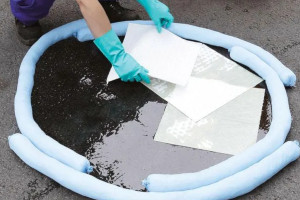
The latest technologies for spill / leak prevention and emergency response is hoped to ensure that Romania's environmental protections align with EU and global best practices. With the focus on a green future, ecological accidents from a major new European oil and gas field will be very unpopular, unless they can be contained with minimal impact.
While they realise there is a need for gas, most European people would rather not have any new oil and gas fields. Any new production reservoirs need to be fully protected from environmental impact.
The Black Sea is an important marine environment, home to dolphins, whales and around 180 different species of fish. It is also an important route and feeding area for many migratory birds such as pelicans and swans. Also, migratory fish including the critically endangered beluga sturgeon are vulnerable to environmental changes.
The Romanians began finding uses for oil in the middle ages, with written accounts as early as 1440. There has been an industrial scale oil and gas industry in Romania since 1857 and offshore in the Romanian Black Sea for several decades. Their existing offshore oil and gas platforms are showing signs of age but are maintained and have an excellent safety record.
Top 20 European Natural Gas Producers. Billion cubic meters (bcm) per year | |||||||||||||||||||||||||||||||||||||||||
Billion cubic meters (bcm) per year. Russia is sometimes considered a European country, but is not included in this list. |
| ||||||||||||||||||||||||||||||||||||||||
100 years ago, Romania was the largest oil and gas producer in Europe. Today the top gas producing countries in Europe are Norway, UK and the Netherlands in that order. All other European countries produce small quantities. Romania is currently the eighth largest supplier, but is a long way off the top 3. This new field promises to promote Romania up in to the top group as a significant European producer.
Top 20 Natural Gas Producers Worldwide. Billion cubic meters (bcm) per year | |||||||||||||||||||||||||||||||||||||||||
While there are variations across different countries, on average a typical residential household may use around a thousand cubic meters of gas per year. Therefore one billion cubic meters of gas can supply one million such households. Typical gas use example of a country:- Figures in this chart are billion cubic meters (bcm) per year. |
| ||||||||||||||||||||||||||||||||||||||||
To put this in a global perspective, the USA is the top gas producer in the world. Producing more than double the entire European production!
About The Author | |
| Richard Johnson |  |
| Chewells Contributor | |
Richard is one of our main oil industry contributors. He likes fast cars, motor boats and... »
...
 Sorin (Oct 9, 2024)
  This field could boost Romanian output by five times what they produce today! You can’t deny that’s game changing. Sorin: Oil and Gas Consultant
Elena (Oct 9, 2024) My uncle is a fisherman, and he worries this project will disturb his work. Fish are already not so many as before.
Bogdan, 46, Mechanic (Oct 9, 2024) I hope it will bring jobs too, not just profit for big companies
Andrei (Oct 9, 2024) I hope this gas project will help bring down prices for us. Many of us struggle with high costs, so any help is good
Richard Johnson (Oct 9, 2024) More gas for Europe means fewer carbon-heavy coal plants. I know this project has its risks, but if it reduces Europe’s carbon footprint, isn’t that a win? Plus, no one can deny the potential for economic growth.
Margy (Oct 9, 2024) Have we learned nothing from other offshore disasters? Sure, we want energy, but at what cost? There are other ways. Just one major spill, and we’re talking decades of damage to the Black Sea’s ecosystem. It's not like the open ocean. There is not that much flow out of the Black Sea. What spills in there will stay in there. I'm sick of these greedy oil companies digging up more and more places. When will it end?
Luca (Oct 9, 2024) As someone who lived through the 2009 gas crisis, I’m all for this. No one wants to be at the mercy of Russia again, especially during winter.
This field could boost Romanian output by five times what they produce today! You can’t deny that’s game changing. Sorin: Oil and Gas Consultant
Elena (Oct 9, 2024) My uncle is a fisherman, and he worries this project will disturb his work. Fish are already not so many as before.
Bogdan, 46, Mechanic (Oct 9, 2024) I hope it will bring jobs too, not just profit for big companies
Andrei (Oct 9, 2024) I hope this gas project will help bring down prices for us. Many of us struggle with high costs, so any help is good
Richard Johnson (Oct 9, 2024) More gas for Europe means fewer carbon-heavy coal plants. I know this project has its risks, but if it reduces Europe’s carbon footprint, isn’t that a win? Plus, no one can deny the potential for economic growth.
Margy (Oct 9, 2024) Have we learned nothing from other offshore disasters? Sure, we want energy, but at what cost? There are other ways. Just one major spill, and we’re talking decades of damage to the Black Sea’s ecosystem. It's not like the open ocean. There is not that much flow out of the Black Sea. What spills in there will stay in there. I'm sick of these greedy oil companies digging up more and more places. When will it end?
Luca (Oct 9, 2024) As someone who lived through the 2009 gas crisis, I’m all for this. No one wants to be at the mercy of Russia again, especially during winter.
 Aba Selassie (Oct 9, 2024) This is Romania’s chance to step up. Let’s just hope this field lives up to the hype.
Ioana (Oct 9, 2024) This could mean hundreds of jobs
Andry (Oct 9, 2024) Can’t help but think this is a win-win situation. Romania gains energy independence, and we reduce reliance on Russian gas. That’s a huge strategic benefit for the EU
Cristina (Oct 9, 2024) The Black Sea is home to some pretty unique species, like the Black Sea monk seal. Are they monitoring the impact on these animals? They say they will protect the environment, but those words will soon be forgotten.
Elena (Oct 9, 2024) Honestly, we should focus more on renewables. This project might be great for the economy, but it’s still just more fossil fuel dependency. Solar and wind have come a long way in the last decade why not invest in that instead?
Oldyin (Oct 5, 2024) Few western countries want to deal with Iran or Russia unless they have to
Aba Selassie (Oct 9, 2024) This is Romania’s chance to step up. Let’s just hope this field lives up to the hype.
Ioana (Oct 9, 2024) This could mean hundreds of jobs
Andry (Oct 9, 2024) Can’t help but think this is a win-win situation. Romania gains energy independence, and we reduce reliance on Russian gas. That’s a huge strategic benefit for the EU
Cristina (Oct 9, 2024) The Black Sea is home to some pretty unique species, like the Black Sea monk seal. Are they monitoring the impact on these animals? They say they will protect the environment, but those words will soon be forgotten.
Elena (Oct 9, 2024) Honestly, we should focus more on renewables. This project might be great for the economy, but it’s still just more fossil fuel dependency. Solar and wind have come a long way in the last decade why not invest in that instead?
Oldyin (Oct 5, 2024) Few western countries want to deal with Iran or Russia unless they have to

We value your comments but kindly request that all messages are on topic and respectful.
Please take the time to read our commenting policy.
| |
 Hundreds Of Contaminated Sites In Colombia
 North Sea Ship Fire
 No Storage Wasting Wind Power Chinese Dual Approach To Energy Implications For Global Oil Markets EU Gives More To Russia Than Ukraine Profits Down
 Evasive Tactics Global Trade Oil Investment Returns Travel Costs Up Meat Consumption Down California Burns North Sea Wildlife Resurgence Biden Offshore Drilling Ban Rosebank Stop Oil Cop 29 Oil Deal Secret Recording Natural Gas Pipeline MVP Top 10 Facts Oil Spill Singapore Oil Rig Exlosion India Power Plant
 Robot Driver
Popular Free Courses - Upskill To Improve Your Prospects
|
By entering your email, you agree to receive CHEwells emails, including marketing emails, and agree to our Terms & Conditions and Privacy Policy. Unsubscribe at any time. |

© 2026 CHEwells Ltd. All Rights Reserved.
CHEwells Ltd is not responsible for the content of external sites. Read about our approach to external linking.